
Service
Private Chassis
15 chassis we own outright — so a pull is limited by appointment slots, not by whether there is equipment available.
- 15 chassis owned outright
- No pool shortages, no split fees
- Maintained in-house
What a chassis pool is, and why it matters to you
Most drayage runs on pooled chassis: a shared fleet that carriers draw from at the terminal. It works until demand spikes. Then the pool empties, and every carrier relying on it stops at the same moment — usually the week you most needed the box.
You feel this as a delay nobody can explain properly, and sometimes as a charge you did not expect.
The split fee
A chassis split is when the container and an available chassis are not in the same place, so someone has to make an extra move to bring them together. It appears on your invoice as a real cost caused by an equipment shortage you had nothing to do with.
It is not a line we can bill, because we are not drawing from a pool. The chassis is already ours and already there.
Maintained in-house
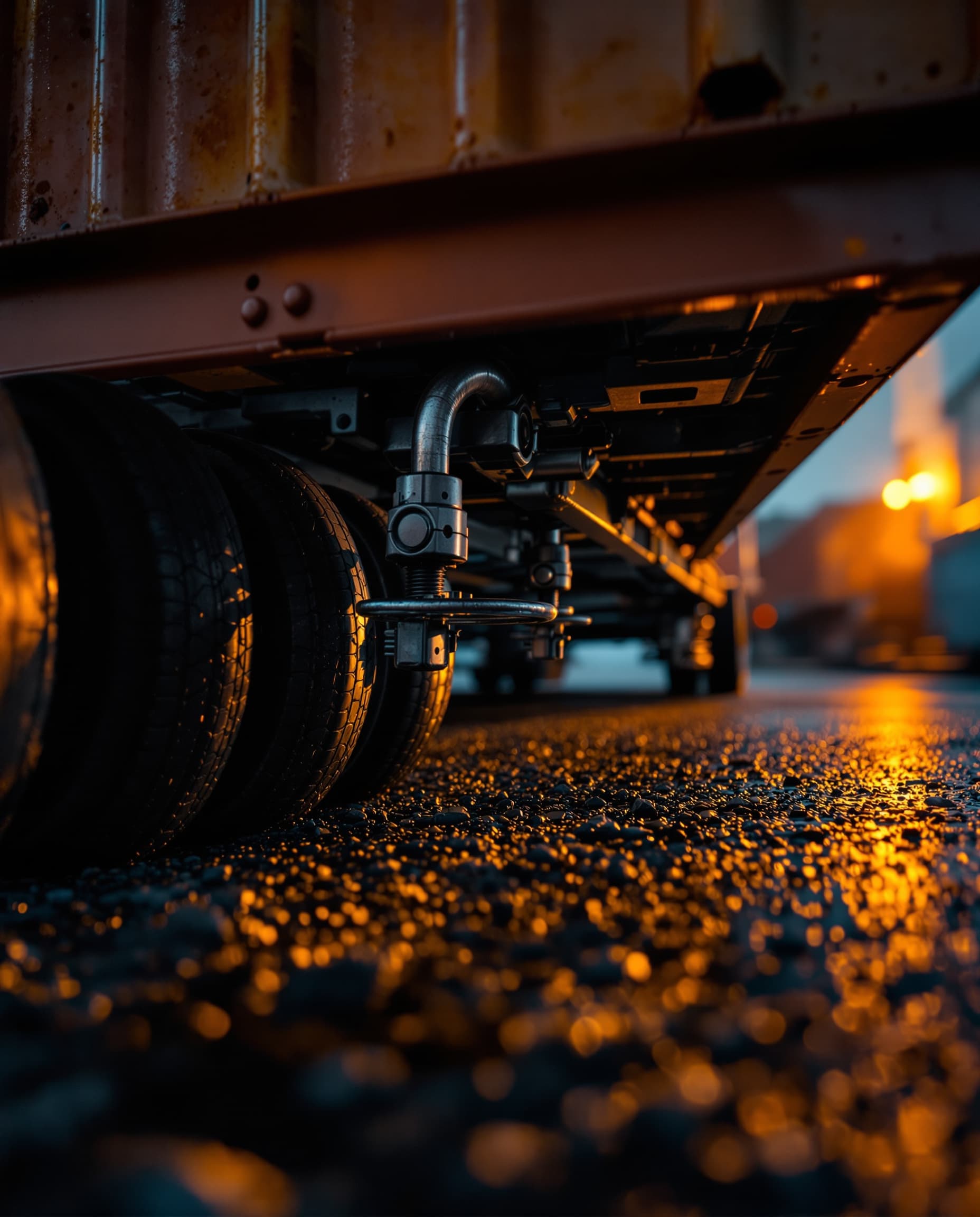
Owned equipment is only an advantage if it is roadworthy. Tyres, brakes, lights and the twist-locks that actually hold the container down get looked after by us, on our schedule, not deferred because the equipment belongs to someone else and it is somebody else's problem.
A roadside failure with your freight on the back is expensive for you and worse for us. The incentives line up when the equipment is ours.
Common questions
What sizes do your chassis handle?
Standard intermodal container sizes. Tell us what is on the bill of lading and we will confirm we have the right equipment before you book rather than after.
Will I ever be charged a chassis split?
Not by us on our own equipment, because there is no pool to split from. If a job ever genuinely requires third-party equipment we will tell you before it happens, not on the invoice.
Need a container moved?
Tell us what is landing and when it has to be on the dock. We will come back with a rate and a window we can actually hold.